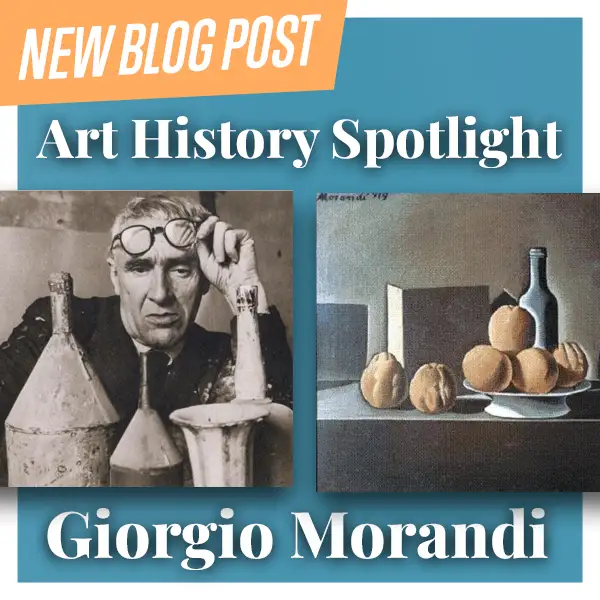
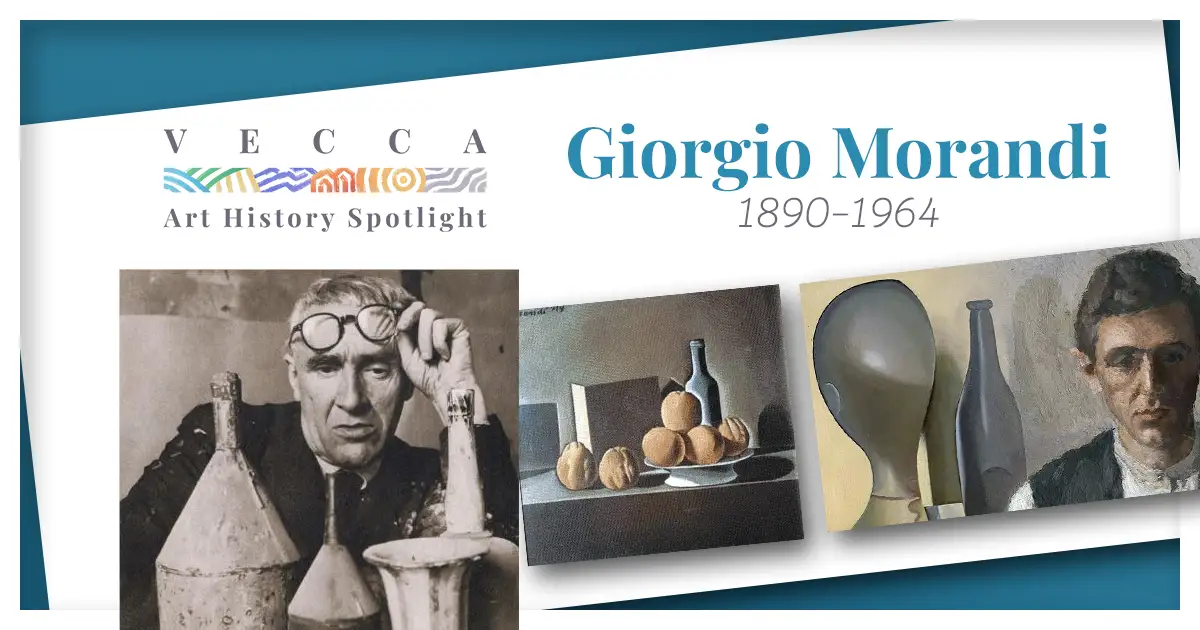
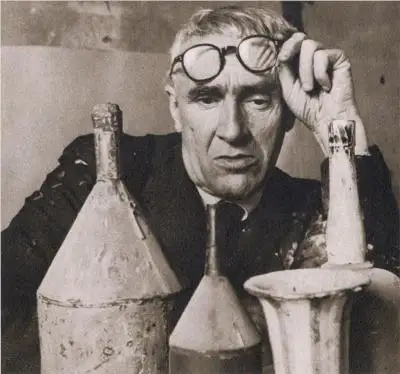
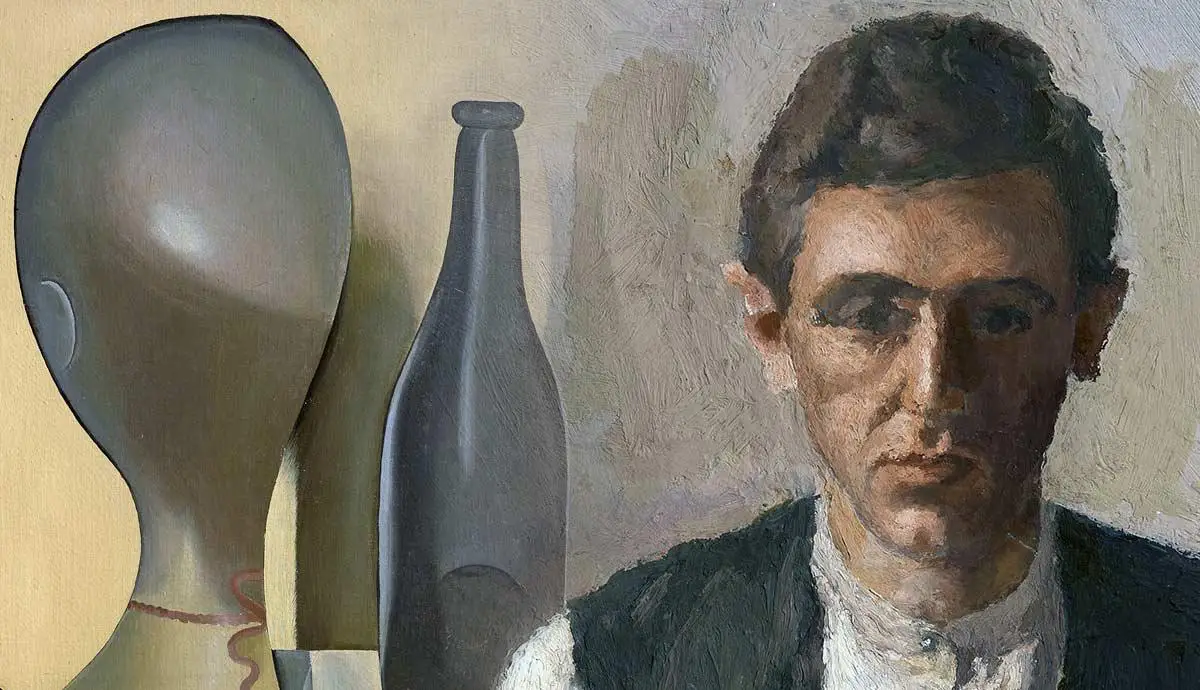
Giorgio Morandi (1890-1964) is often thought of as a painter’s painter. Yes, he is famous, has shown the world over, has won accolades…yet there is something about him and his work that remind this writer and others of humility, honesty, simplicity and solitude—an ageless inner, quieter presence. Though he’s been dead for more than 60 years, he remains a mentor and inspiration to many artists.
Morandi was an Italian painter and printmaker widely known for his subtly muted still-life paintings of ceramic vessels, flowers, and landscapes.
Morandi was born in Bologna, Italy, and was the eldest of five children. Upon his father’s death in 1909, he became the head of the family.
From 1907 to 1913, he studied at the Academy of Fine Arts of Bologna, which focused its curriculum on the traditions of 14th C painting. There, Morandi taught himself to etch by studying books on Rembrandt.
Midway through his studies, he visited Florence, where the works of some of art history’s finest Italian masters—Giotto, Piero della Fransesca, Paolo Uccello–made a profound impression on him.
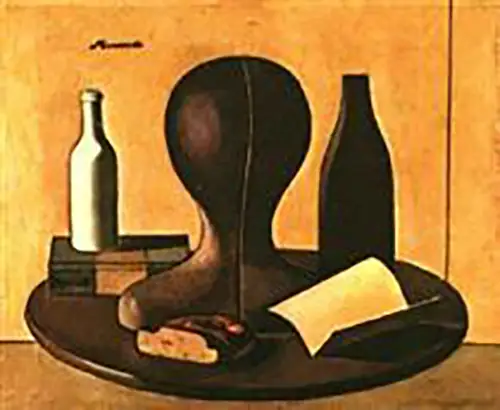
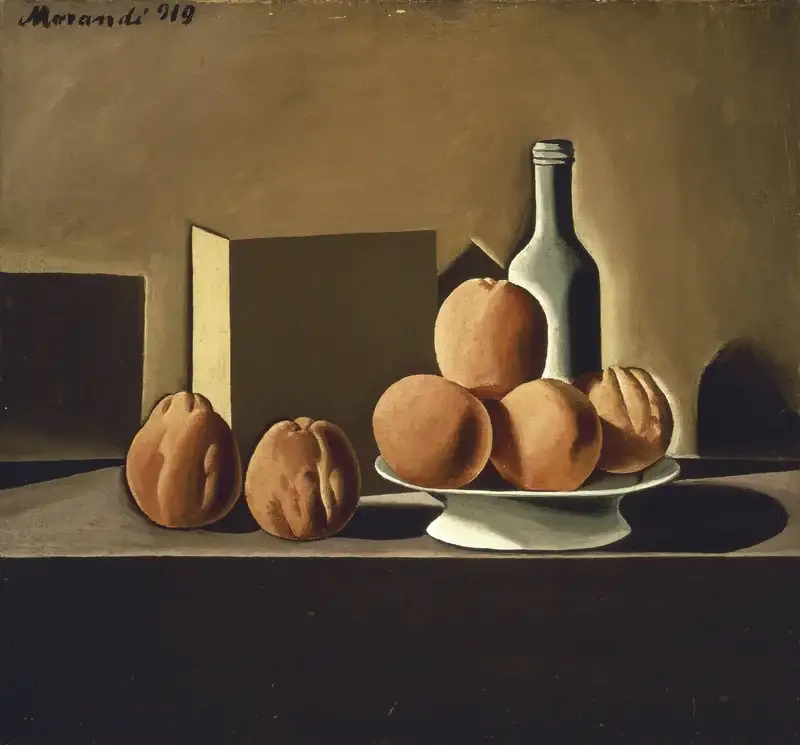
As pictured below, Mordani explored the Futurist style of painting soon after he left the Academy. He also was appointed instructor of drawing for elementary schools in Bologna, a position he held from 1914-1929, and began exhibiting his work.
According to Wikipedia, Morandi joined the army in 1915, had a breakdown and was discharged. It was during World War I that his still life paintings became more reduced compositionally and purer in form. Please see the works of Cezanne and Rousseau if you’re interested in some of the artists who influenced this evolution. Around the same time, a contemporary, Giorgio de Chirico who was not so impressed with the works of French mondernists like Cezanne, developed (along with Carlo Carra) a style of painting called metaphysical art. De Chirico’s work is characterized by sharp contracts of light and shadow and often has a mysterious—some call it vaguely threatening—quality.
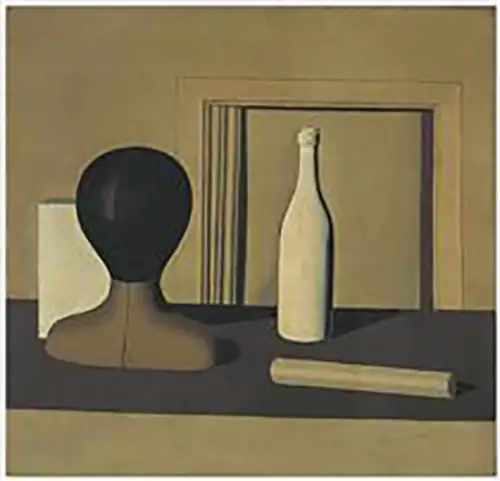
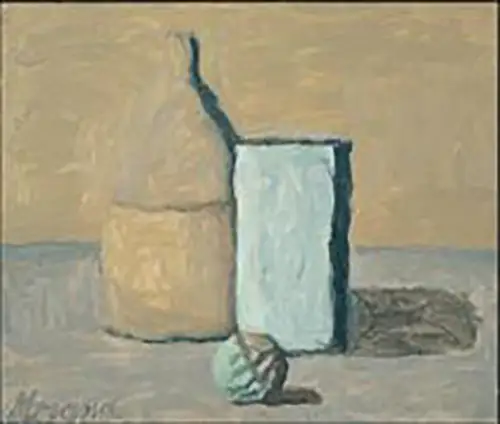
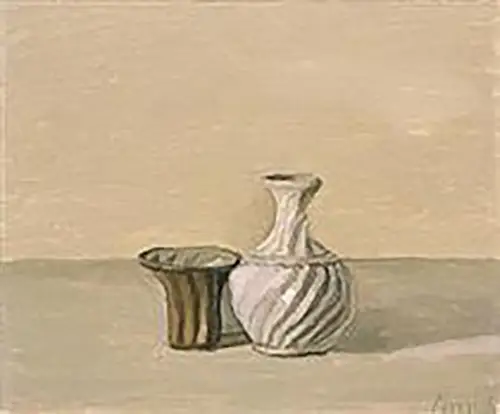
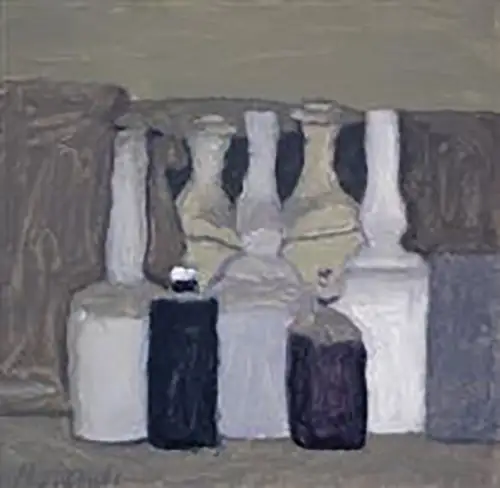
From 1918 to 1922, Morandi painted in a metaphysical style, his last major shift in style. (He exhibited with de Chirico, Carra and Arturo Martini in 1922.) From the early 1920s on, he focused more and more on subtle gradations of hue, tone and objects arranged in a unifying background that created an overall atmosphere. Again, pictured below, his work coloration became increasingly more subtle, the objects more compact, with the painting overall creating what this writer would describe as an auric presence.
By the end of the 1920s, Morandi was more associated with a regional Fascist-influenced group, the Strapaese than the metaphysical artists. He was sympathetic to the Fascist party in the 1920s, although his friendships with anti-Fascist figures led authorities to arrest him briefly in 1943. Mordandi’s political leanings in 1928—relatively early on in his career—are a topic of interest. His gentle works are considered angelic, yet his association with Fascism speaks to some dark underpinnings, according to Waldemar Januszczak, a noted Polish-British art critic. Januszczak writes that “On a superficial level, it can be understood, I think, as a deliberate turning of the back on European modernism, with its air of Parisian decadence and its march towards abstraction. On a deeper level, we are watching a call to order, a specifically Italian search for the formal strictness and faded glory of Piero della Francesca and the Italian primitives. File under ‘Nostalgic’, perhaps, rather than ‘Sinister’”.
From 1930 to 1956, Morandi was a professor of etching at Accademia di Belle Arti.
From 1928, Morandi exhibited his work in Italy and abroad, winning prizes for his paintings and prints at major exhibitions up to 1962.
Morandi died of lung cancer on 18 June 1964 at age 73.
Roads might be treacherous today. Stay safe everyone.
Donate To Support The Arts In Our Rural Community
VECCA is an all volunteer 501(c)3 non-profit organization with an art center and gallery located in the heart of Shenandoah County, VA. VECCA relies on the amazing generosity of its Board of Directors, the community, and the family and friends of its wonderful Artists, Musicians, Writers, and other Creatives. Please consider donating for VECCA to continue connecting the community with the creative arts in wonderful ways.