I like to think of myself - as an artist - as being in a nondescript swamp, up to my knees in mire, painting the vital beauty I see there, in my own way, not caring a damn about tradition, or anyone's opinion.
- Charles Burchfield
The work of Charles Burchfield is most decidedly founded, not on art, but on life, and the life that he knows and loves best.
- Edward Hopper, friend and fellow artist
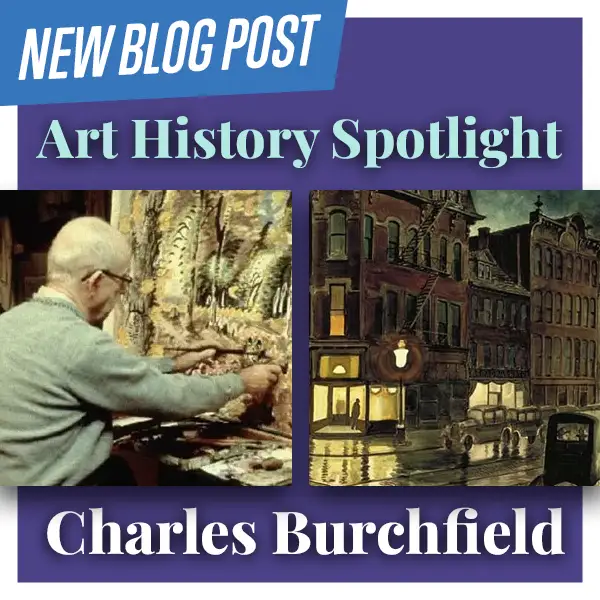
Living in the beautiful Shenandoah Valley is such an inspiration for artists, especially those painters and photographers moved by the changing pallet of nature as the brilliant greens of summer shift into yellows, reds, and oranges of autumn. This month, VECCA’s Art History Spotlight will pay homage to the naturalist Charles Burchfield. Burchfield was no realist, though. His paintings were transcendental—infused with his vision of a life force that dives deep within and radiates far beyond a medium on paper or canvas. As the art historian Matthew Baigell wrote: Few American Artists have ever responded with such passion to the landscape or have made it such a compelling repository as well as a mirror of their intimate feelings.
Charles Burchfield (1893-1967) was born in Ashtabula Harbor, Ohio, and was known as a town-landscape painter of middle-western America. He was raised by his widowed mother in Salem, Ohio. Most of his early work was done at his mother’s home, where he lived from the ages of five to 28. Burchfield thought of being a nature writer, and he loved reading writers like Thoreau and Willa Cather’s whose work involved descriptions of nature.
In 1916, Burchfield graduated from the Cleveland Institute of Art where he was influenced by the artist/teacher Henry Keller. Keller led a generation of Ohio watercolor painters, including Burchfield. Another major influence was William Sommer, the modernist movement leader in and around Cleveland. Sommer introduced Burchfield to experimental watercolor and color theory.
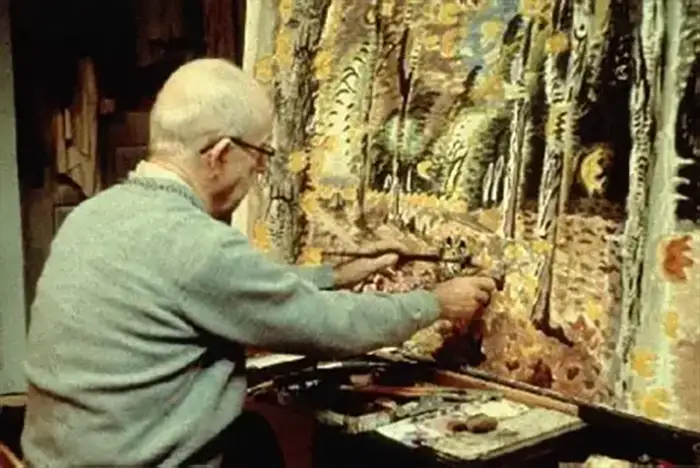
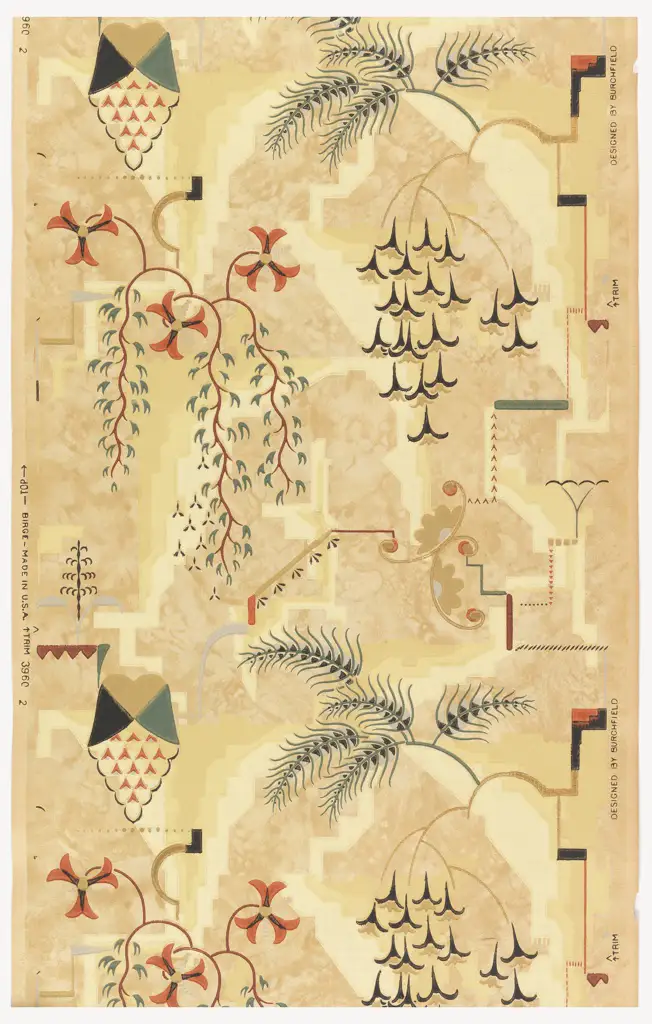
After serving in WWI, in 1921, Burchfield moved to Buffalo, spending the rest of his life in the rural neighborhood of Gardenville, where he worked as a designer at a wallpaper company. In 1922, he married, and by 1928 he had achieved enough critical acclaim to leave his job at the wallpaper company—a risky thing to do with the Great Depression on the horizon—to paint full time and show/sell at the Frank Rehn gallery in New York. Today, an original Burchfield at auction runs about $73,000.
Burchfield also taught for a relatively short stint at the Art Institute of Buffalo (1949-1952) and at the University of Buffalo (1950-1952).
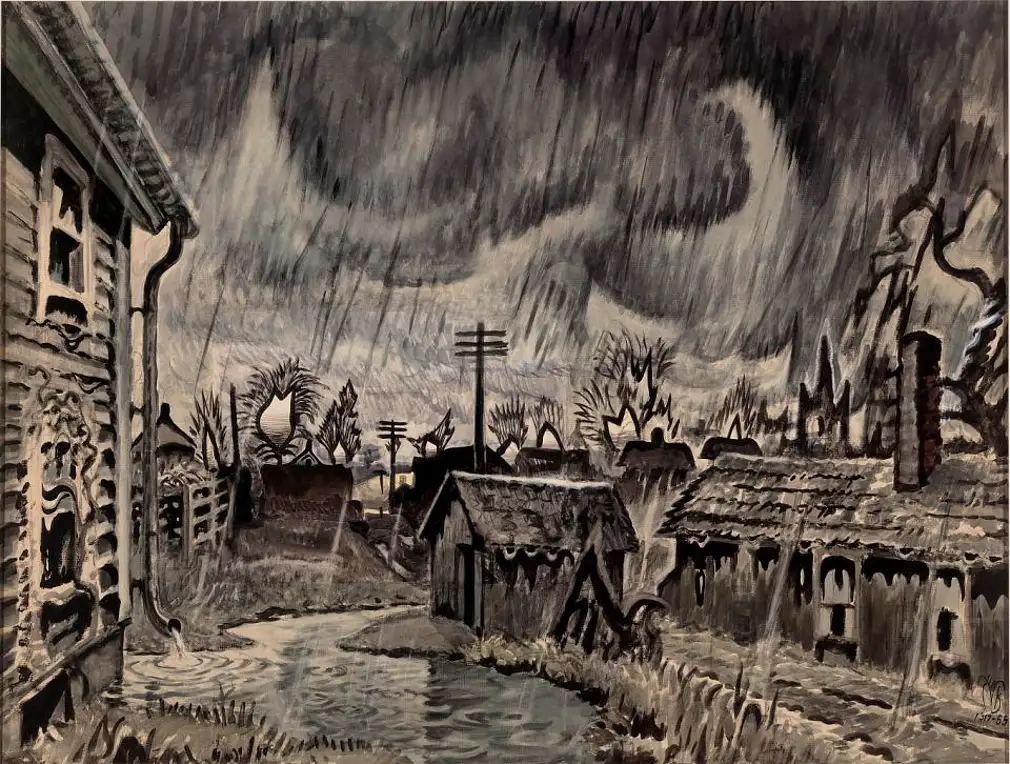
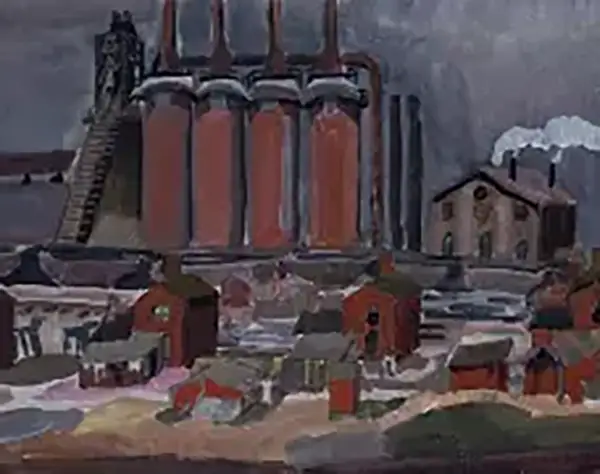
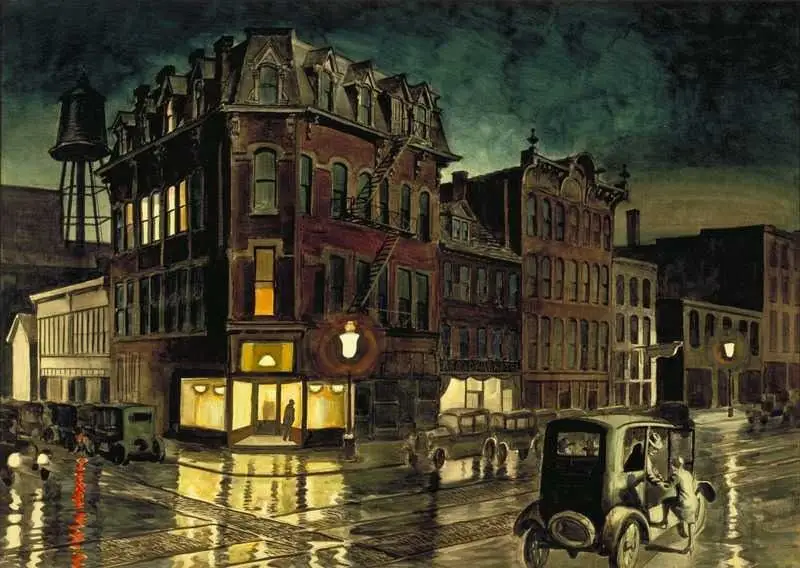
Burchfield’s career can be divided into three phases. The first is landscapes based on childhood memories and fantasies and ended about 1918; the second, from 1918 to 1943, is Social Realism, including “grimy streets and rundown buildings of the eastern Ohio area,” and the third phase is a return to subject matter of his childhood and “investing them with a kind of ecstatic poetry,” again according to Biagell.
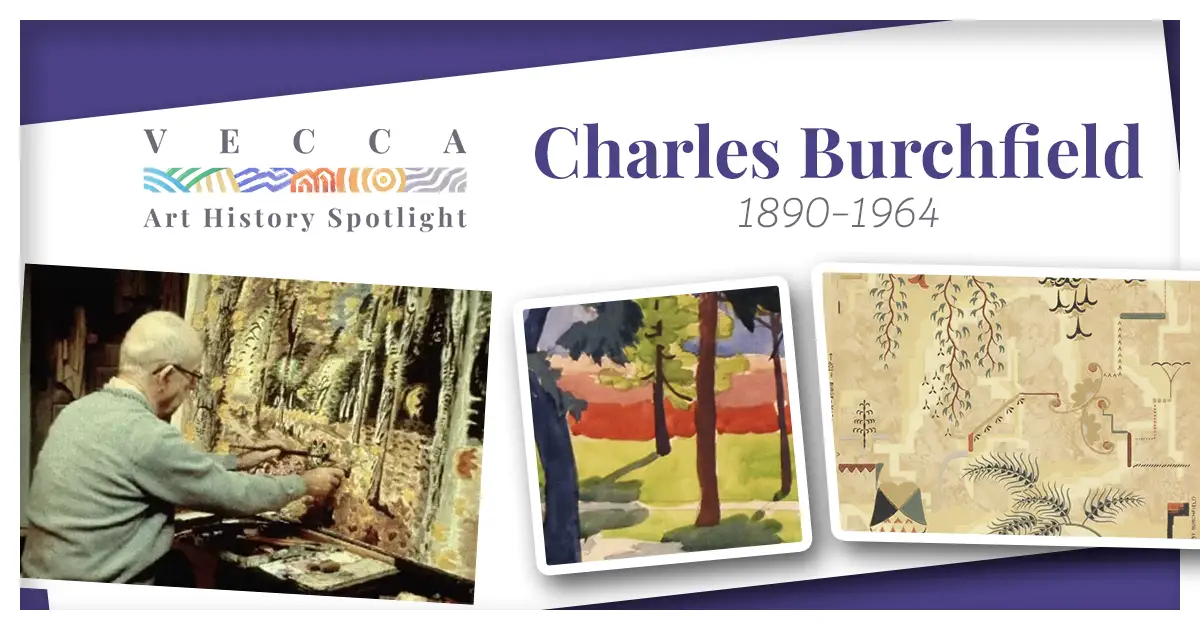
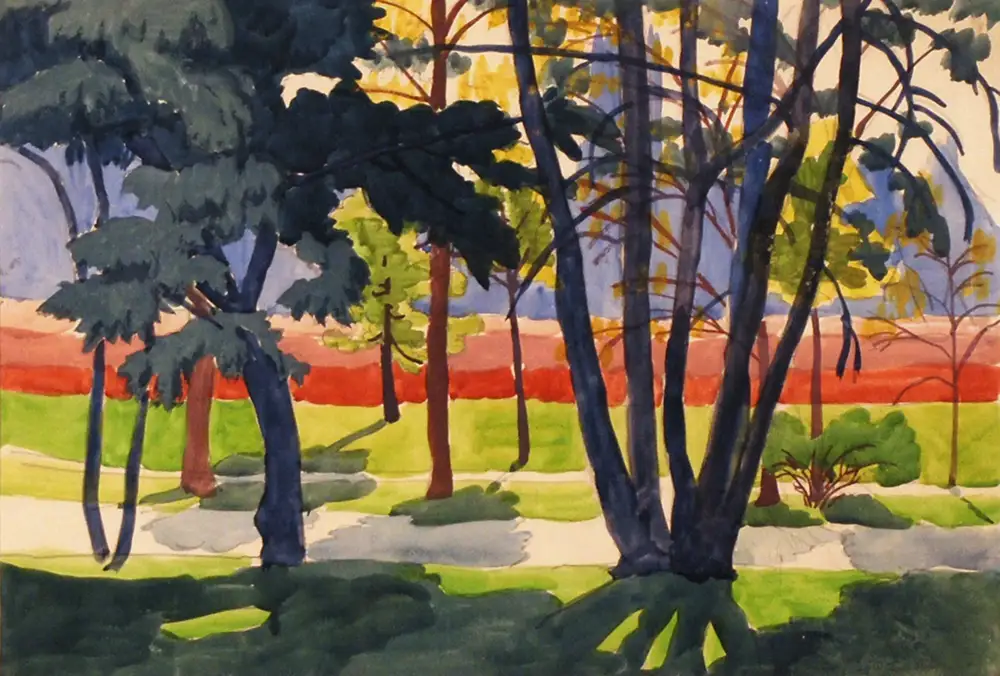
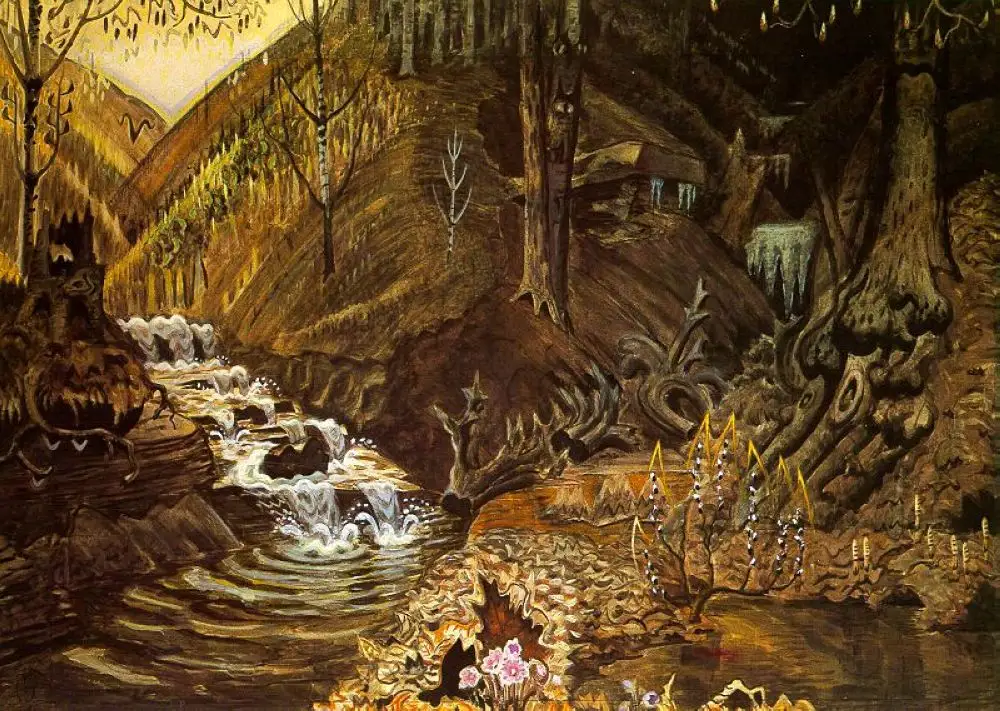
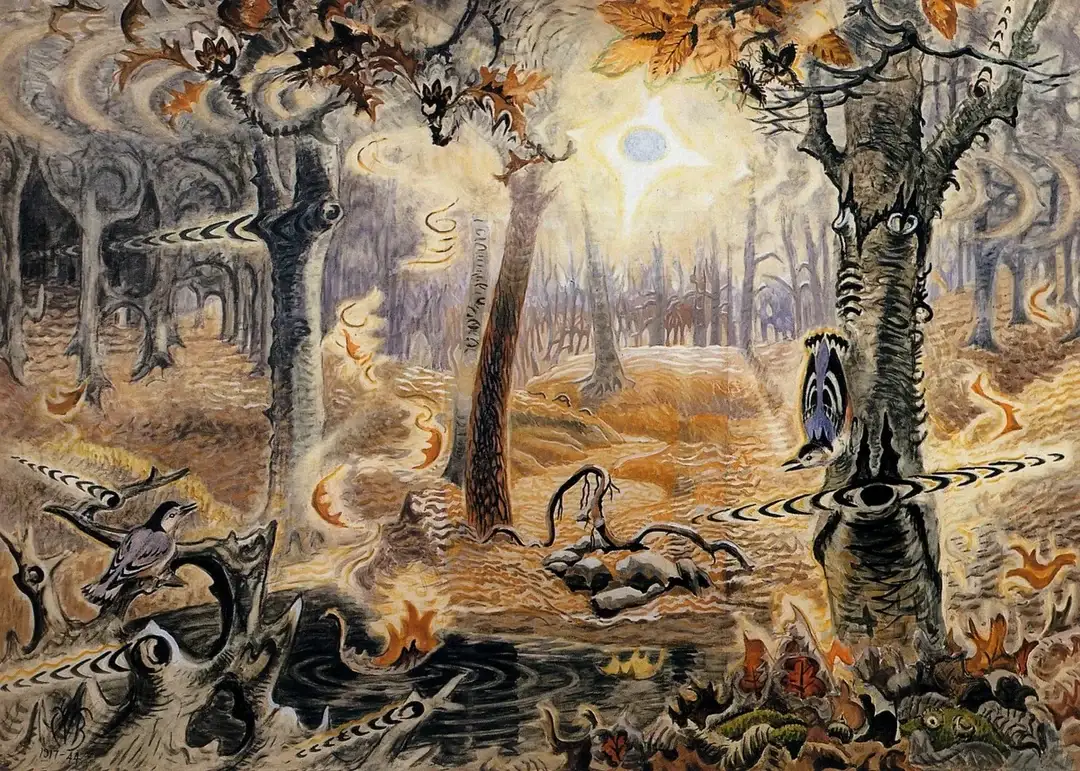
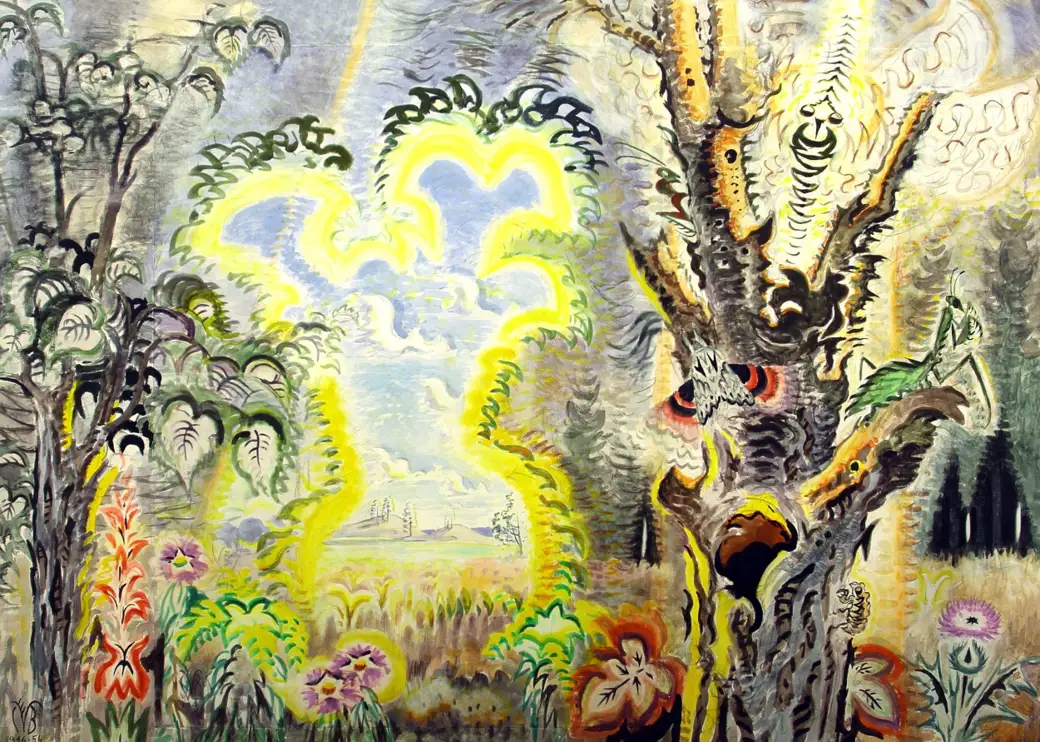
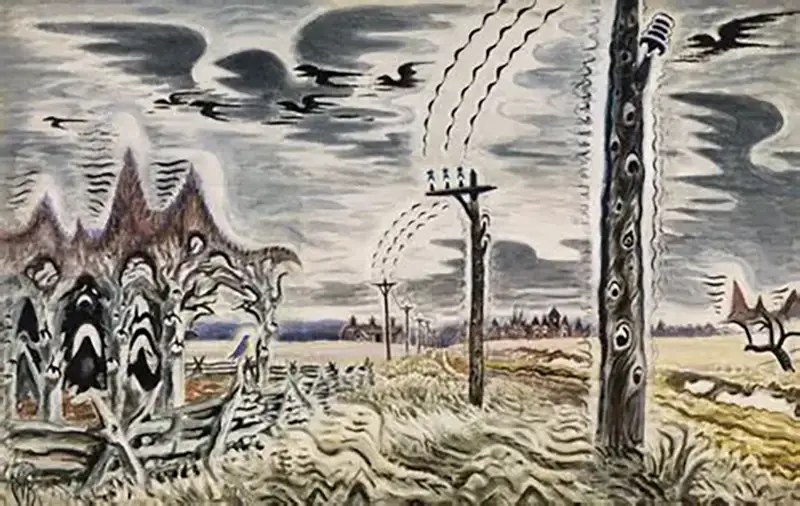
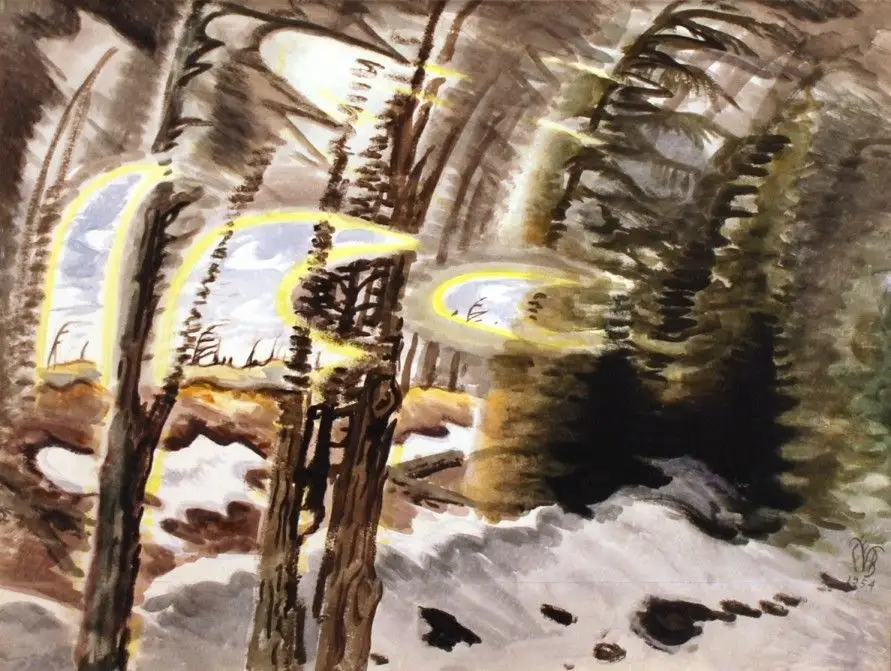
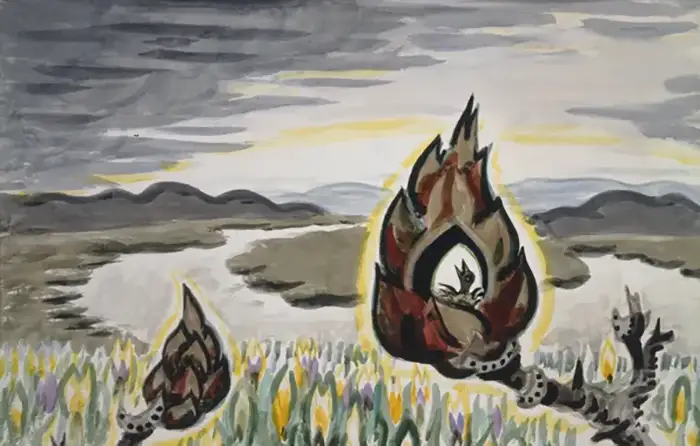
As readers can see from the photos of his work, Burchfield developed an abstract shorthand for various shapes and moods. The interpretation of his feelings and moods, of the sounds and mystical life force of nature comes through clearly in his work.
One of his most famous watercolors is Night of the Equinox, 1917-1955 (below).

The watercolor, ink, and charcoal work depicts a violent spring equinoctial storm in Salem, Ohio, with rain pouring from ominous clouds and “fantastical trees” dancing in electrified air. Burchfield described it as “one of the most exciting weather events of the whole year,” blending the literal storm with his memory and imagination. The piece uses landscape forms as symbols of dreams, memories, and childhood — a subjective, emotional response to the equinox’s natural drama.
A night when the world’s rhythms align in a way that feels both universal and deeply personal. Night of the Equinox blends realism with symbolic abstraction. The storm’s chaotic energy is rendered with precision, yet the “fantastical trees” and swirling forms suggest the artist’s inner world. The equinox, as a turning point in the year, becomes a metaphor for transformation — the shift from light to dark, from one season to another, and from one phase of life to another. Burchfield’s choice to anchor the scene in a personal memory transforms the equinox from a purely astronomical event into a lived, emotional experience. The painting invites viewers to see the equinox not just as a date, but as a moment of natural and personal change — a reminder that the most vivid memories often coincide with the most intense weather. In this way, Night of the Equinox is both a record of a specific storm and a universal meditation on the interplay of nature, time, and memory.
Burchfield had a long career—almost 45 years living a reclusive life in his rural home and studio. Below are examples of his work through the decades of his productivity.