I don’t think ever I would paint a picture without music to listen to. All humans must have something like that, that warms them inside.
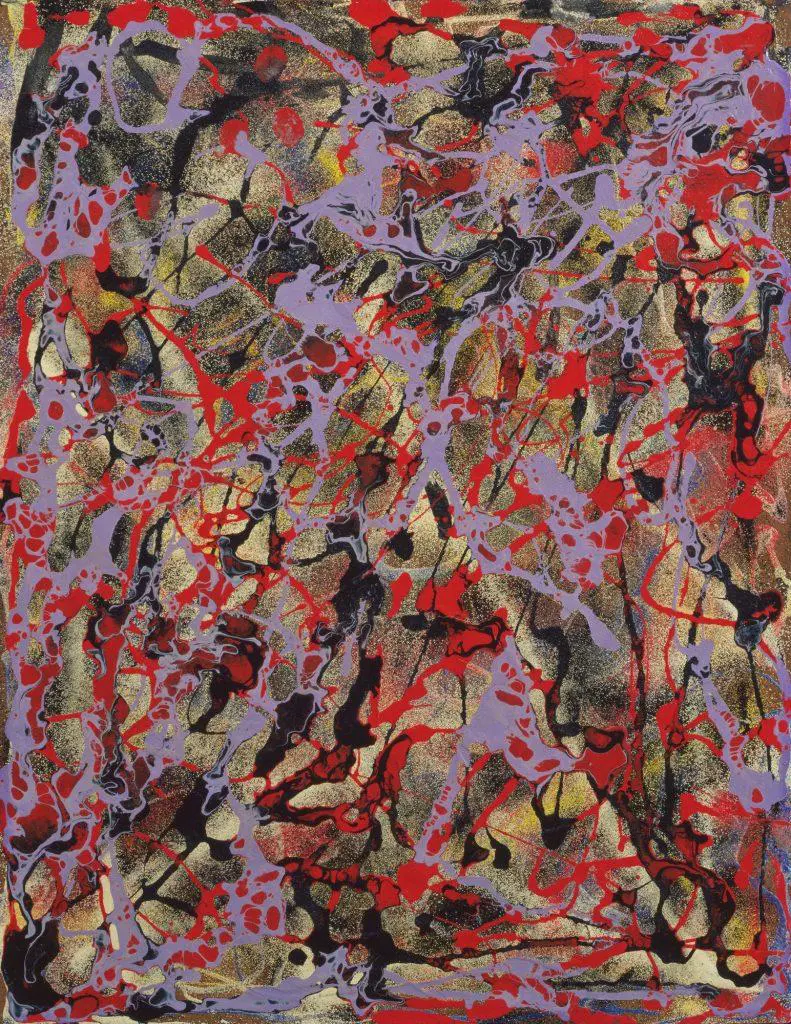
Very few people don’t know the name and work of Jackson Pollock, the volatile abstract expressionist known for the drip paintings. The technique is called action painting as the artist almost dances around, splashing and dripping house paint onto large canvases laid out on the floor.
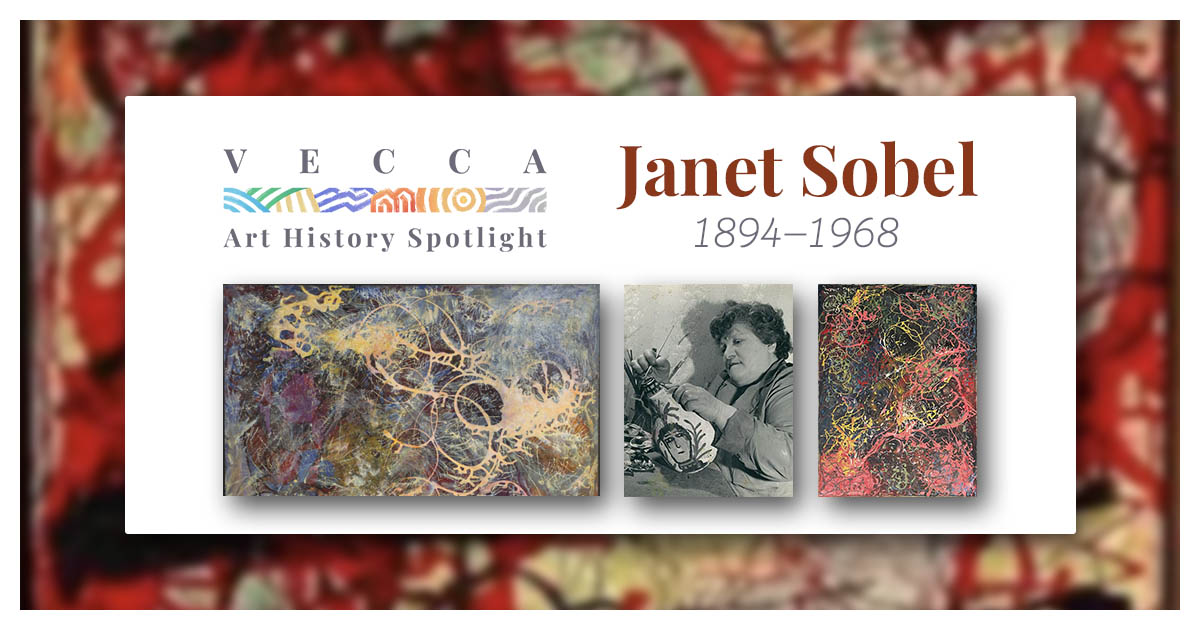
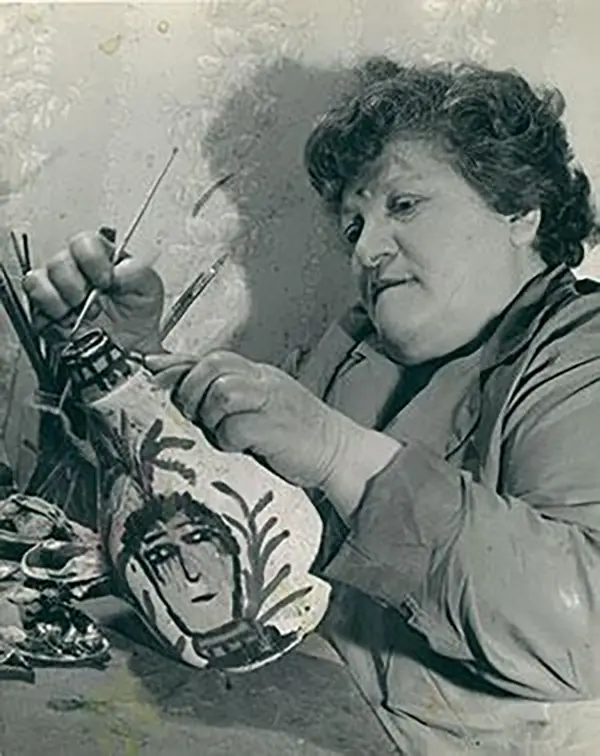
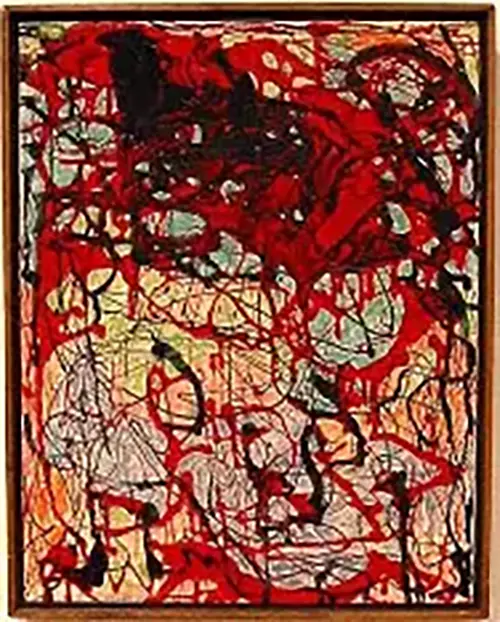
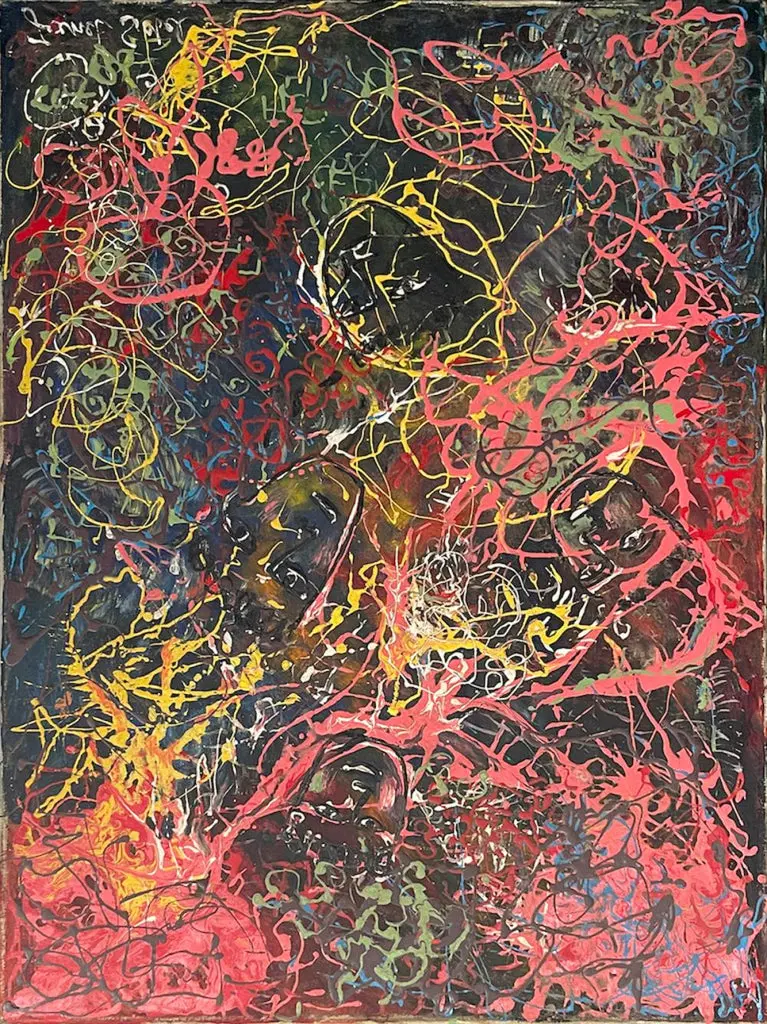
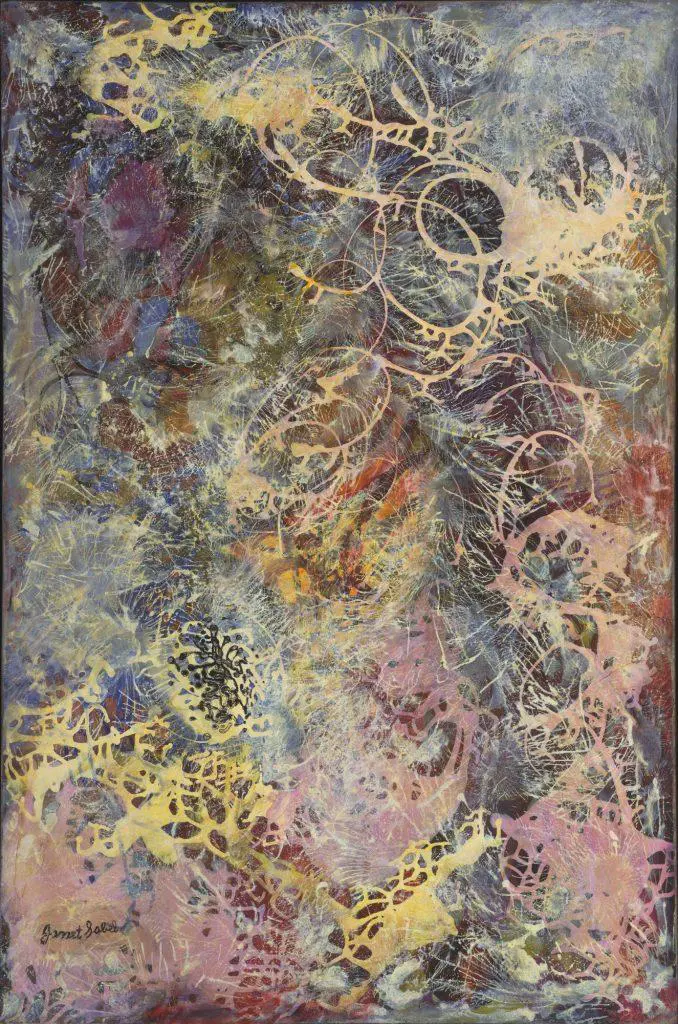
But instead of focusing on the well-known Pollock, this month let’s meet Janet Sobel (1893-1968), the woman who pioneered the technique of drip painting. Sobel was a Ukrainian-born Jewish American housewife from Brooklyn. She was born as Jennie Olechovsky in 1893 in Katerynoslav, Russia, now Dnipro, Ukraine. Her father, Baruch Olechovsky,was killed in a violent riot in a Russian pogrom. In 1908, Sobel moved to Brighton Beach, Brooklyn, with her mother and siblings. In 1910, at age 17, she married Max Sobel, also a Ukrainian emigrant, with whom she had five children.
Sobel was already a grandmother when she began painting in 1937 at the age of 45.
Unlike other Abstract Expressionists, Sobel never had the money for private art lessons; she was entirely self-taught as an artist, inventing her own style and painting processes. An article on her in the Daily Art Magazine by Isabella Hill noted that she cited music as one of her inspirations, stating how it stimulated her feelings which she poured directly onto the canvas. The article continued to describe her process as an automatic technique, working “quickly with the sole focus on one idea that popped into her head, giving her the necessary inspiration.”
Her work began to gain recognition after her son, Sol, an art student, recognized her artistic talent. He aided her by sharing her work with many of the émigré Surrealists, such as Andre Breton and Max Ernst, along with the philosopher/writer John Dewey and art dealer/writer/collector Sidney Janis.
Sobel was mainly recognized as a housewife who took up painting as a hobby, a label perpetuated by the leading art critics of the time, including Clement Greenberg. He described her work as purely “primitive” and that of a “domestic housewife,” while praising Jackson Pollock for these same techniques experimented with two years later.
Peggy Guggenheim noticed Sobel’s work at the Plum Gallery and included her in a group show at her gallery in 1945. Jackson Pollock visited this gallery and ultimately admitted that Sobel’s work “had made an impression on him”. Guggenheim later mounted a solo show of her work. Unfortunately for Sobel, she was often overshadowed by her male counterparts during the Abstract Expressionist movement, which was male dominated. As a result, she never really got the credit of being the creator of “drip paintings”, the technique for which Jackson Pollock had become famous.
Sources: Wikipedia. Daily Art Magazine, 24 February 2025, Isabella Hill. (Additional references are embedded in this article.)
Roads might be treacherous today. Stay safe everyone.
Donate To Support The Arts In Our Rural Community
VECCA is an all volunteer 501(c)3 non-profit organization with an art center and gallery located in the heart of Shenandoah County, VA. VECCA relies on the amazing generosity of its Board of Directors, the community, and the family and friends of its wonderful Artists, Musicians, Writers, and other Creatives. Please consider donating for VECCA to continue connecting the community with the creative arts in wonderful ways.
“Donation – $5” has been added to your cart. View cart